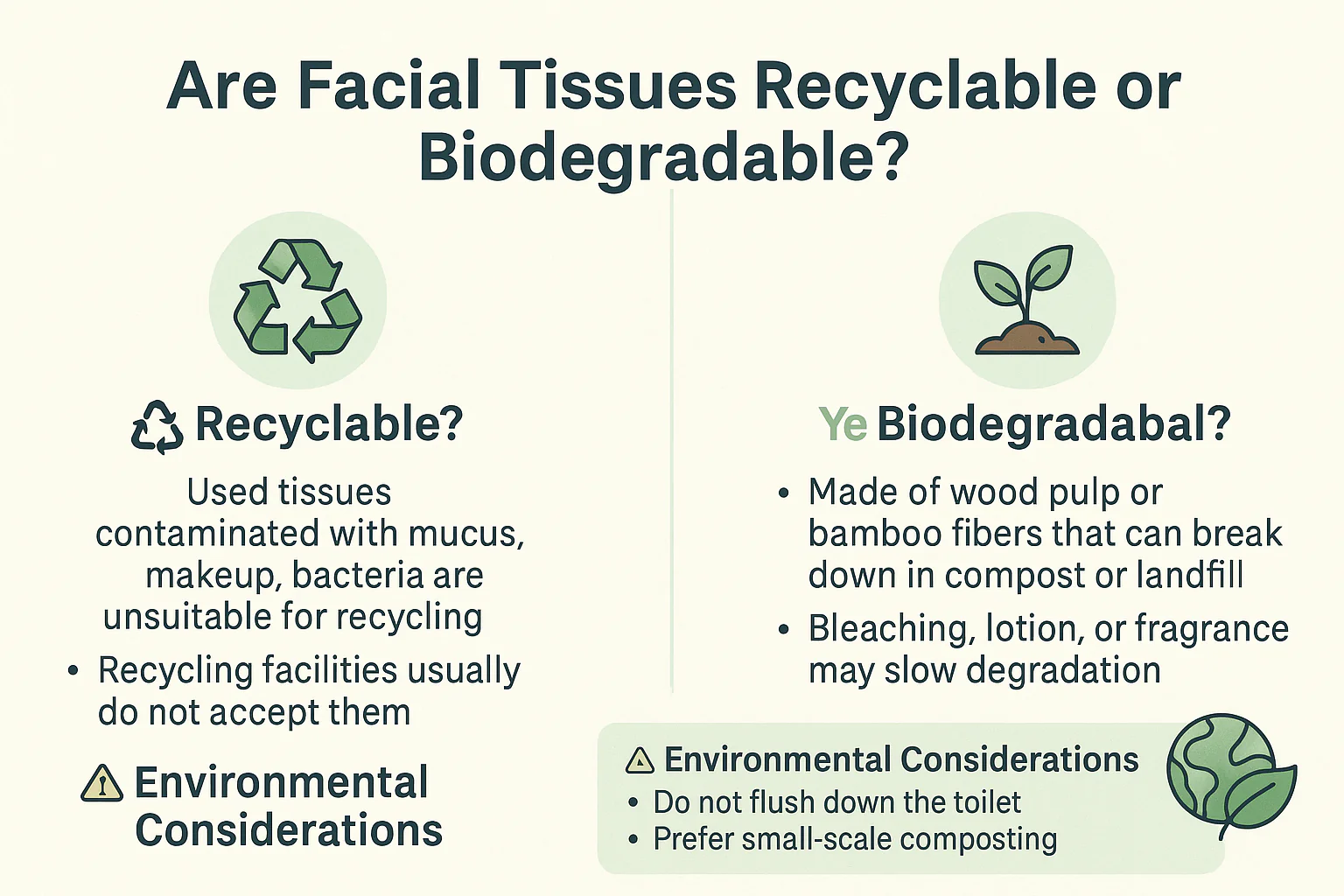
Are Facial Tissues Recyclable or Biodegradable? Environmental Impact Explained?
I used to throw tissues straight into the recycling bin. Turns out, that was a mistake. Not all paper is recyclable — and facial tissues are trickier than they seem.
Facial tissues are not recyclable due to contamination, but most are biodegradable and home-compostable. The environmental impact depends on materials used, additives, and how they are disposed of after use.
Understanding the environmental cost of something we use every day — and throw away just as fast — starts with knowing how facial tissues break down.
Are facial tissues biodegradable?
Biodegradable sounds like a green light — but that depends on what’s in the tissue and where it ends up.
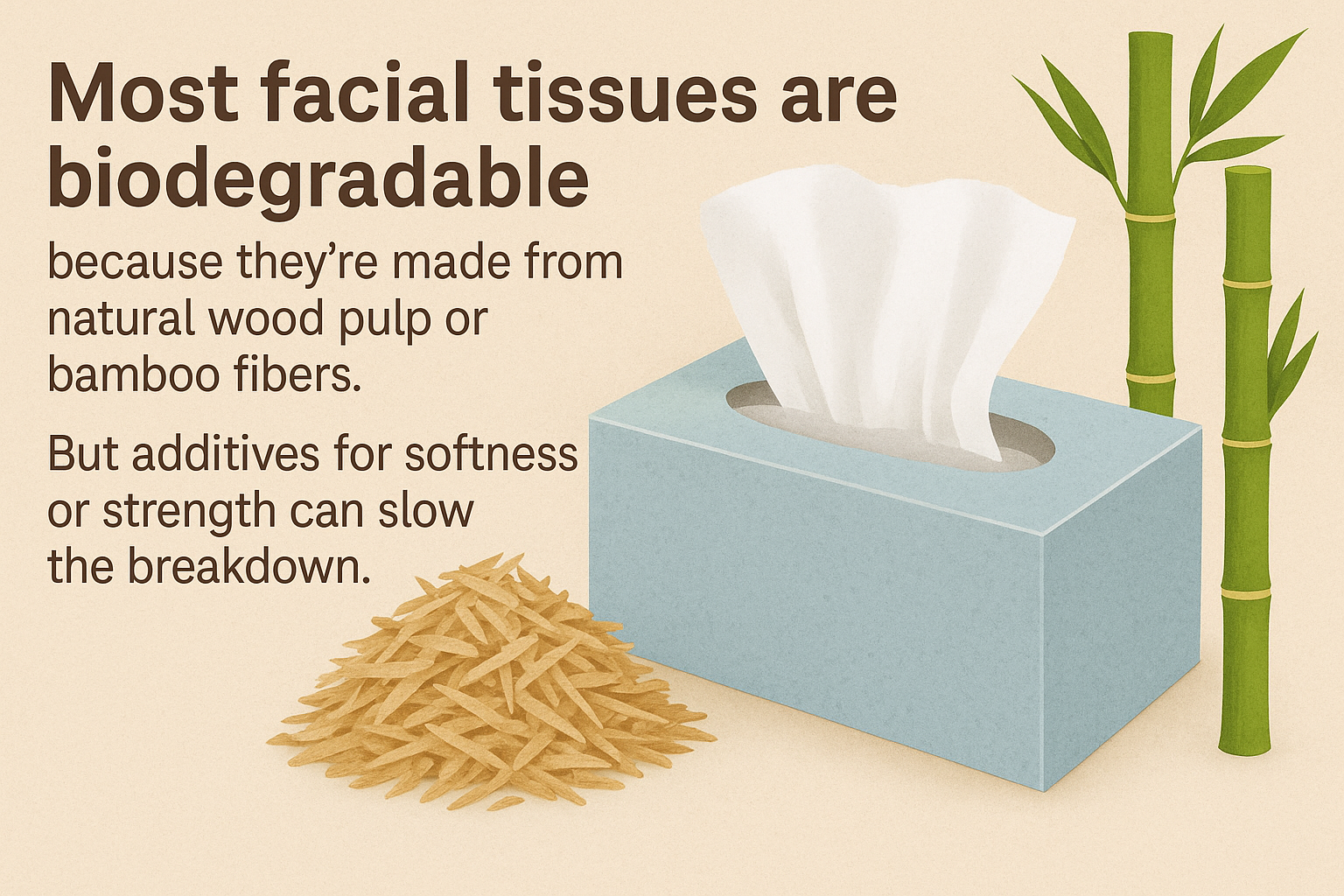
Most facial tissues are biodegradable because they’re made from natural wood pulp or bamboo fibers. But additives for softness or strength can slow the breakdown.
I checked the box on a well-known tissue brand and saw the words “Made from FSC-Certified pulp.” That’s a good start. But then I saw that the tissue had a softening additive — and that changes the story. Natural fibers decompose. But chemicals can delay or complicate that process.
Facial tissues are biodegradable under the right conditions. In compost or landfill environments, they’ll eventually break down. Some take a few weeks. Others take months, depending on how thick they are, how many layers they have, and whether they contain lotions or synthetic fibers.
I tested this in my home compost. Plain bamboo tissues disappeared in about five weeks. But lotion-infused ones? Still sitting in the pile after two months.
If you're buying for sustainability, go for fragrance-free, bleach-free, lotion-free options. Look for “100% biodegradable” on the label, and brands that openly share ingredient details.
Can facial tissues be recycled?
This surprised me — even clean-looking tissues don’t belong in the recycling bin.
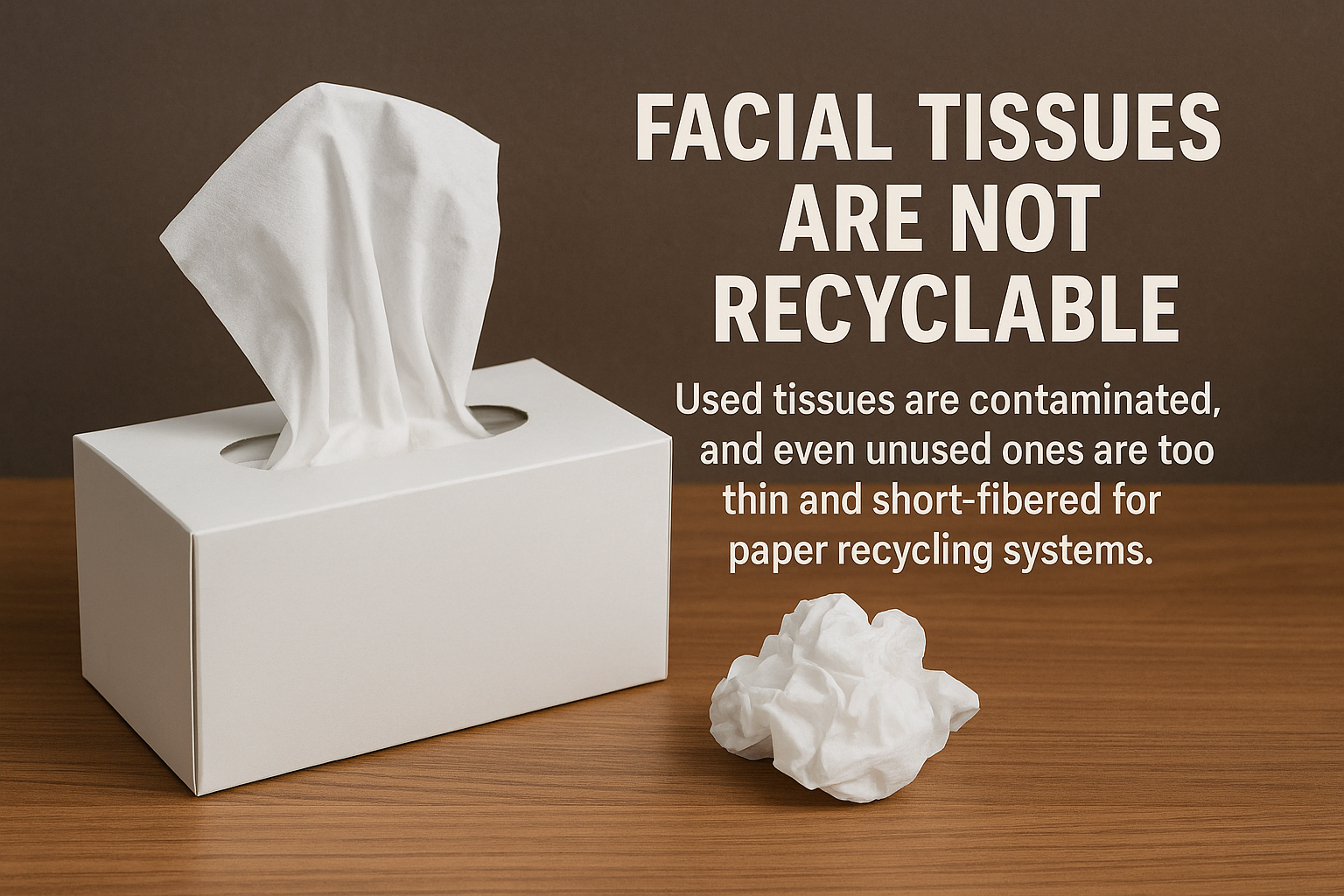
Facial tissues are not recyclable. Used tissues are contaminated, and even unused ones are too thin and short-fibered for paper recycling systems.
I once dropped a full stack of unused tissues into the paper bin at work. Later, I learned from our office facility manager that tissue paper — even unused — is considered low-grade paper. It's already near the end of its life cycle in terms of fiber quality.
Used tissues are worse. Bodily fluids like saliva or mucus turn them into contaminated waste. Recycling centers reject them instantly. Some facilities treat them like biohazards if they’re mixed in with other paper products.
Recycling tissue boxes? Yes. That cardboard container can go in your blue bin. But the tissues themselves? Landfill or compost only — and never, ever down the toilet.
Can facial tissues be composted?
This is the gray zone — composting depends on the type of tissue and how it’s been used.
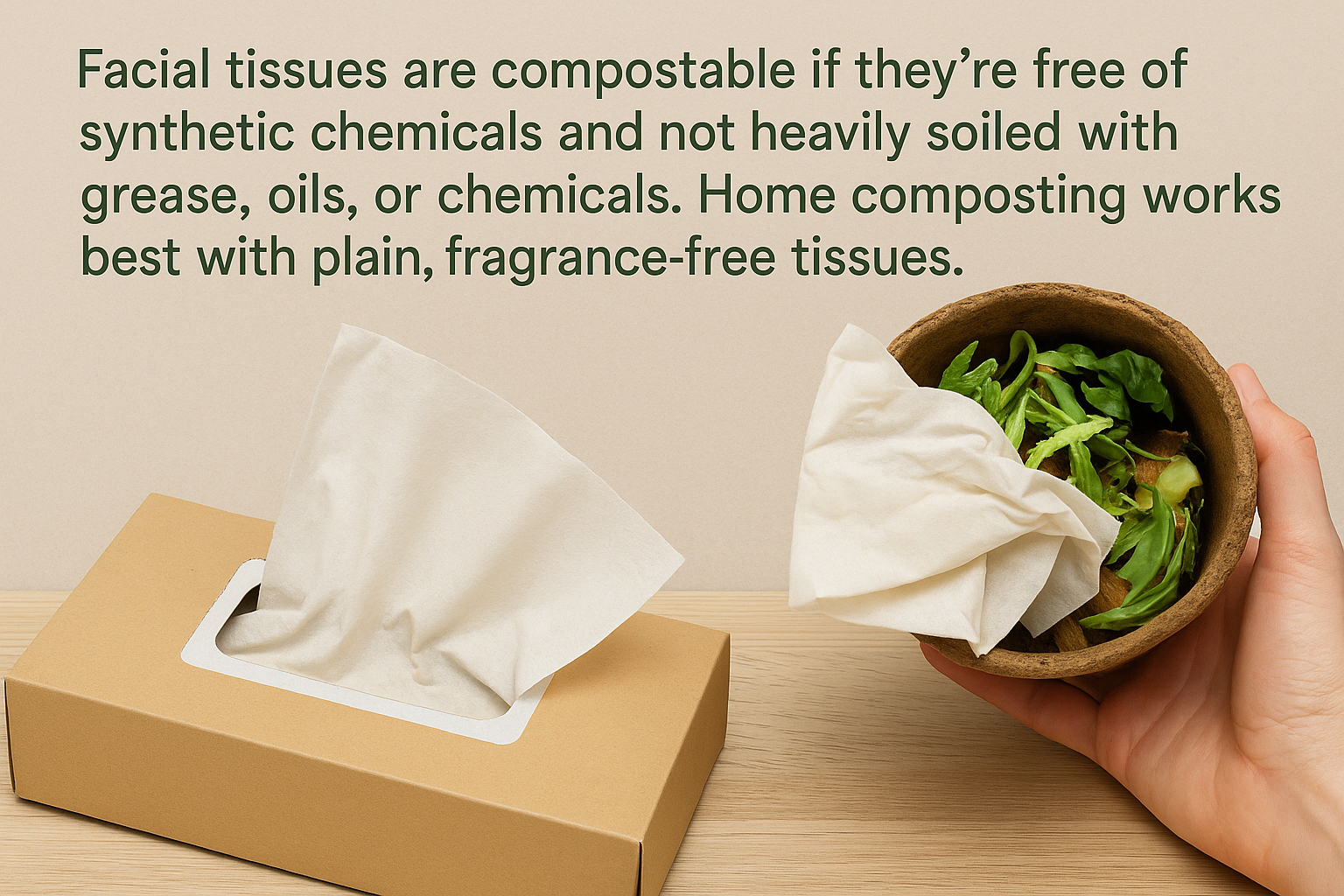
Facial tissues are compostable if they’re free of synthetic chemicals and not heavily soiled with grease, oils, or chemicals. Home composting works best with plain, fragrance-free tissues.
I add tissues to my compost all the time, but I’ve learned to be picky. If it’s a basic, no-lotion tissue used to blow a nose or clean a tear, it goes straight in. If it has makeup or hand soap residue, I throw it in the trash.
Some cities allow tissues in their green bin programs. Others don’t. Always check your local waste guide. When in doubt, test the breakdown. Tear the tissue and bury it with food scraps. If it vanishes in a few weeks, it’s safe to add.
Composting is still better than landfilling. It turns paper back into usable soil. But it only works if the tissue doesn’t contain plastics, dyes, or other non-compostable materials — things some luxury or scented brands still add.
How long does it take for tissues to decompose?
This depends on the brand, thickness, and where the tissue ends up after use.
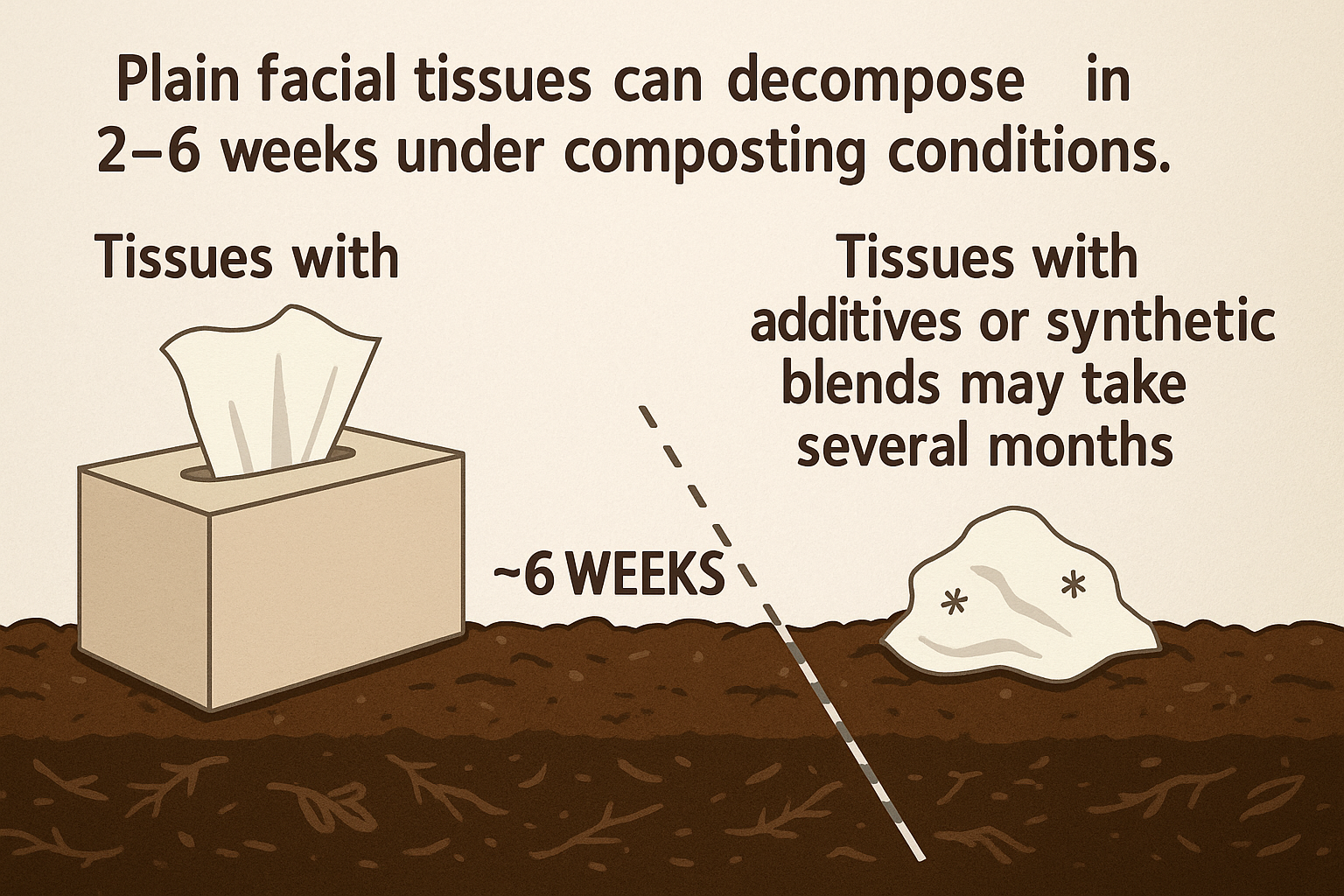
Plain facial tissues can decompose in 2–6 weeks under composting conditions. Tissues with additives or synthetic blends may take several months.
I tested five brands in my backyard compost. The winner was a bamboo-based tissue with no added scent or softness. It disappeared in under a month. A scented, lotion-rich national brand? Still half intact after eight weeks.
In landfills, where there’s little oxygen or microbial action, tissues break down much slower. Some can linger for years. This is why disposal method matters. Composting helps speed things up, especially when paired with food scraps and moisture.
Want to know if your tissue will break down fast? Do a simple soak test. Place a sheet in water and stir. If it starts to fall apart in 30 seconds, it’s a good candidate for compost. If it holds shape or floats, it’s been treated to resist breakdown.
That may feel like a small test, but it gives a real glimpse into the environmental impact of everyday products.
Conclusion
Facial tissues aren’t recyclable, but most are biodegradable and compostable — if you choose the right kind and dispose of them wisely. When in doubt, go plain, scent-free, and compost-friendly.
Share this article
About the Author

You might also like

Why Are Bamboo Fibre Tissue Manufacturers with Low MOQs Better Suited for Small and Medium-Sized Wholesalers?

Why Is Demand for Bamboo Fibre Toilet Paper Growing Rapidly in the US Market?

How to Determine Whether a Bamboo Fibre Tissue Manufacturer Possesses Long-Term Supply Capability?

Why Are Soft Pack Facial Tissues Gaining Popularity in Hotels and Restaurants?

How Can Customized Soft Pack Facial Tissues Boost Your Brand’s Image?
What Are the Key Benefits of Using Soft Pack Facial Tissues Over Traditional Boxed Tissues?

Is There a Market Demand for Eco-Friendly Soft Pack Facial Tissues in the Middle East?

What Should Wholesalers Look for in a Reliable Soft Pack Facial Tissue Manufacturer?

Can Soft Pack Facial Tissues Be Customized for Religious and Holiday Events?