Onepacktissue Blogs

Why Are Bamboo Fibre Tissues More Environmentally Friendly Than Traditional Wood Pulp Tissues?
More consumers are asking for sustainable paper. But not all "green" claims are equal. Bamboo fibre tissue is quickly becoming the smart choice—and for good reason. Bamboo fibre tissues are more eco-friendly because bamboo grows rapidly, requires no pesticides, and absorbs more CO₂ than trees. It’s biodegradable, uses less water, and helps reduce deforestation. Certified bamboo tissues meet international sustainability...

How Facial Tissue Is Made: Manufacturing Process and Safety Standards?
I never thought about how facial tissue was made until I toured a paper mill. What seemed like a simple product actually follows a precise process with strict standards. Facial tissues are made from wood pulp, recycled or bamboo fibers, processed into thin sheets through pulping, pressing, and drying. Safety standards like ISO, TAPPI, and Green Seal ensure hygiene, strength,...

Top Questions About Facial Tissue Answered: Softness, Layers, and More?
I used to think all tissues were the same until I compared different boxes. The softness, the number of layers, and even the eco-friendliness can change the whole experience. Facial tissue FAQs often focus on softness, ply count, and eco-friendly options. Softer, multi-layered tissues protect skin and provide comfort, while bamboo and recycled options balance performance with sustainability. Here are...
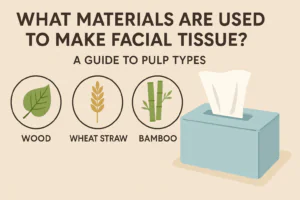
What Materials Are Used to Make Facial Tissue? A Guide to Pulp Types?
I used to assume all tissues were just “paper.” But when I started looking into how they’re made, I discovered a whole world of different pulp types with unique strengths. Facial tissues are mainly made from wood pulp, recycled fiber, or bamboo pulp. Each material affects softness, strength, cost, and sustainability, shaping both comfort and environmental impact. Knowing the difference...
Why Facial Tissue Quality Matters for Hygiene and Comfort?
I used to buy the cheapest tissues I could find, but my skin told me otherwise. Poor-quality tissue can hurt comfort and even compromise hygiene. High-quality facial tissues protect skin, reduce irritation, and limit germ spread. They’re softer, stronger, and more hygienic than low-grade alternatives, making them essential for both comfort and health. I learned through trial and error that...
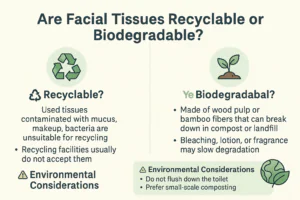
Are Facial Tissues Recyclable or Biodegradable? Environmental Impact Explained?
I used to throw tissues straight into the recycling bin. Turns out, that was a mistake. Not all paper is recyclable — and facial tissues are trickier than they seem. Facial tissues are not recyclable due to contamination, but most are biodegradable and home-compostable. The environmental impact depends on materials used, additives, and how they are disposed of after use....
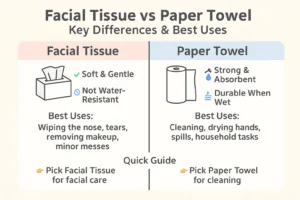
Facial Tissue vs Paper Towel: Key Differences and Best Uses?
I used to think all paper products were the same — until I used a paper towel on my face. Big mistake. Here’s how facial tissue and paper towel really differ. Facial tissues are soft and designed for skin contact, while paper towels are strong, absorbent, and made for surface cleaning. Each has its role — using them wrong can...
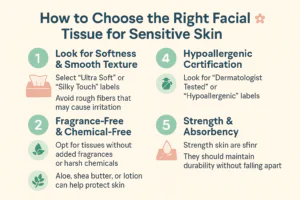
How to Choose the Right Facial Tissue for Sensitive Skin?
If your skin gets red or itchy after using regular tissues, you’re not imagining it. The wrong facial tissue can hurt sensitive skin — but the right one can protect it. The best facial tissues for sensitive skin in 2025 are ultra-soft, fragrance-free, and free from harsh chemicals. Look for “hypoallergenic” labels, lotion-free formulas, and trusted brands like Kleenex Ultra...
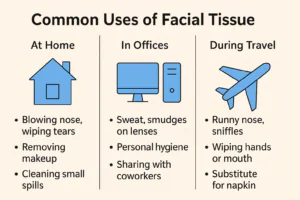
Common Uses of Facial Tissue in Homes, Offices, and Travel?
Facial tissue isn’t just for colds. It’s a daily essential in homes, offices, and on the road — if you’re using it right, it does a lot more than you think. Facial tissues are used for hygiene, quick cleanups, and personal care in home, office, and travel settings. They’re soft, disposable, and made for wiping skin, cleaning messes, and managing...
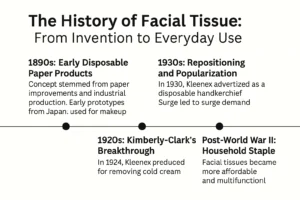
The History of Facial Tissue: From Invention to Everyday Use?
Facial tissue feels like a modern convenience, but its story is longer and more surprising than most people think. Let’s trace how it became part of everyday life. Facial tissue was first introduced by Kimberly-Clark in 1924 as a makeup remover. Marketed under the brand Kleenex, it quickly evolved into a disposable handkerchief, then into a household essential used globally....