Do Soft Pack Tissues Meet Middle East Hygiene Standards like GSO?
If you're exporting to Saudi Arabia, UAE, or other GCC countries, your tissues can't just be soft—they must be certified.
Soft pack facial tissues can fully comply with GSO hygiene standards[^1] and ISO regulations[^2] when produced under proper certification, making them acceptable for customs clearance[^3] and retail sale across GCC countries.
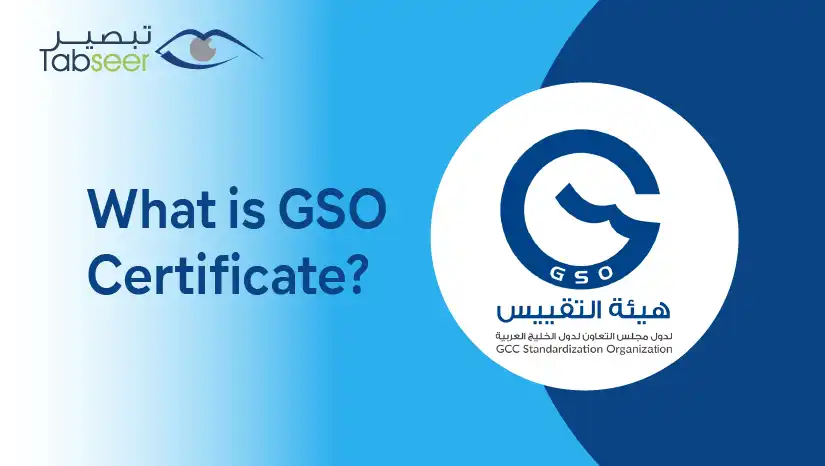
When I worked with a wholesaler in Riyadh, their first shipment was delayed at customs because the labeling didn't include GSO-compliant info in Arabic. We fixed the packaging, added lab test documentation[^4], and the second batch passed. Let’s break down how to ensure your soft packs meet the standard.
What Are the GSO Requirements for Facial Tissues?
The GSO standard (GSO 575:2016[^5]) is the official guideline for tissue paper in the GCC.
GSO 575:2016[^5] requires facial tissues to be at least 2-ply, hygienically produced[^6], and packed in sealed packaging[^7]—such as plastic wrap used in soft packs.
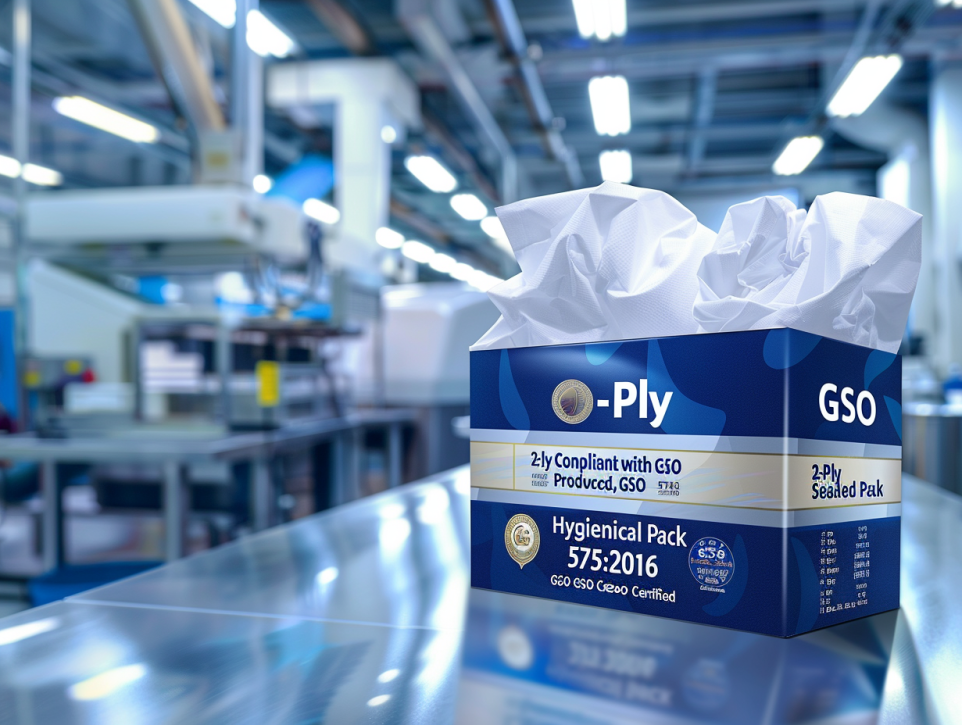
This standard applies whether you're using box or soft pack formats. It defines everything from raw material content to testing for absorbency, strength, and even packaging cleanliness. If you’re exporting to the Gulf, meeting these criteria isn’t optional—it’s enforced.
GSO 575:2016[^5] Key Requirements
| Requirement | Applies to Soft Packs? ✅ |
|---|---|
| Minimum 2-ply construction | ✅ Yes |
| Clean, dust-free packaging | ✅ Yes |
| Sealed, tamper-proof wrapper | ✅ Yes |
| Proper labeling in Arabic/English | ✅ Yes |
| Testing for absorbency, tensile strength[^8] | ✅ Yes |
Do Soft Pack Tissues Comply with Hygiene Certifications?
Yes—but only when made in certified facilities.
Soft pack tissues can meet hygiene standards like GSO and ISO 9001[^9]/22716 if manufactured with certified virgin pulp, sealed film, and under sanitized production lines.
One client in Oman asked us to support SGS testing[^10] for absorbency and bacterial contamination. Our factory already had ISO 9001[^9] and GSO conformity for tissue packaging, so we provided full documentation. The key is proving that your tissues are clean and safe—especially for facial use.
Typical Hygiene Certifications for Tissues
| Certificate | Purpose |
|---|---|
| ISO 9001[^9] | General quality management |
| ISO 22716 | Cosmetic GMP (for wipes, lotions) |
| SGS/Intertek Report | Independent lab testing |
| GSO 575 Compliance | GCC hygiene standards for facial tissues |
How Can Suppliers Prove GSO Compliance for Exports?
GSO compliance isn’t just a label—it’s a package of documents.
Suppliers can prove GSO compliance through lab test reports, factory certifications, and G-mark declarations[^11] for applicable product types.
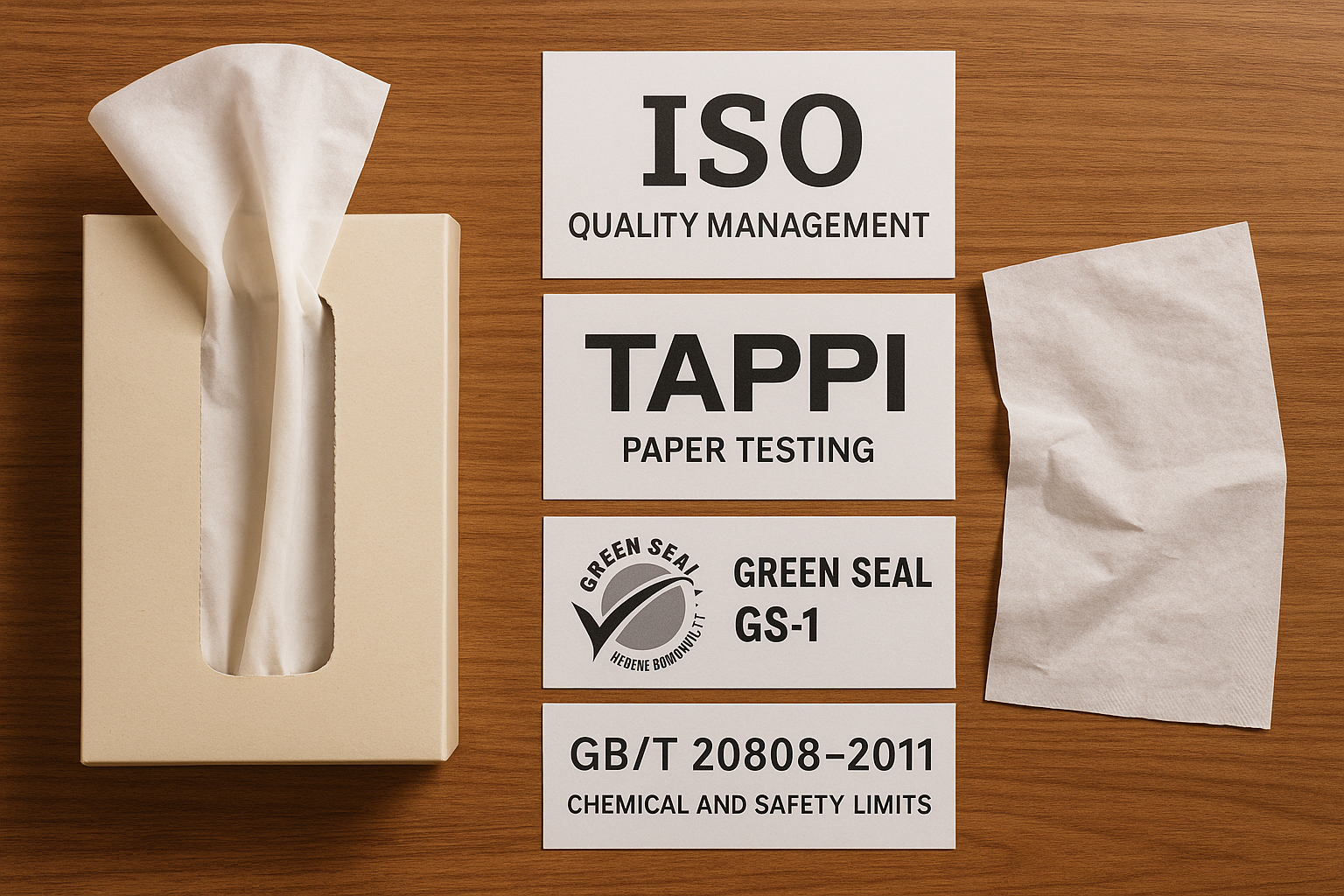
For a Kuwaiti importer, we prepared a compliance kit that included a GSO test summary, factory ISO certificate, and a bilingual label proof[^12]. Customs in Kuwait City cleared it in 2 days. If you're a buyer, always ask for:
- A GSO 575 conformity declaration
- Ply and absorbency test results
- Language-compliant packaging design (Arabic + English)
- Factory ISO or SGS hygiene certification
Export Checklist for GSO Tissues
| Document Type | Why It’s Needed |
|---|---|
| ISO/GMP Certificate | Verifies factory hygiene controls |
| Lab Test Report (Absorbency, Ply) | Proves physical compliance |
| GSO Packaging Layout (Label) | Required for Arabic markets |
| Country of Origin Statement | Customs requirement |
| Bilingual Barcode Label | Needed for retail shelf display |
What Are the Labeling Requirements Under GSO for Soft Packs?
It’s not just about what’s inside—the outside matters, too.
GSO labeling rules require Arabic language, product description, manufacturer info, ply count, and shelf life (if applicable) printed clearly on the tissue pack.
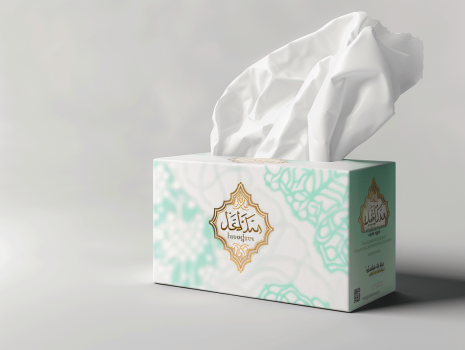
One of our buyers in Doha almost had his shipment delayed because the label only had English text. We revised the soft pack design to include full Arabic translation, batch number, and a halal mark[^13]. It passed immediately on recheck.
GSO-Compliant Soft Pack Label Template
| Label Element | Language | Placement Suggestion |
|---|---|---|
| Product name (e.g. Facial Tissue 2-Ply) | Arabic + English | Front |
| Ply count | Arabic + English | Side/Back Panel |
| Manufacturer details | Arabic + English | Back |
| Country of origin | Arabic | Back or Seal |
| Expiry date (if applicable) | Arabic | Bottom or Edge Strip |
| Barcode | Arabic/Global | Bottom or side |
Why Is GSO Compliance Important for Tissues in GCC Markets?
Because without it, your shipment might not make it to the shelf.
GSO compliance ensures your tissues can be sold legally in Saudi Arabia, UAE, Kuwait, Oman, Bahrain, and Qatar—making it essential for import approval and retail distribution.
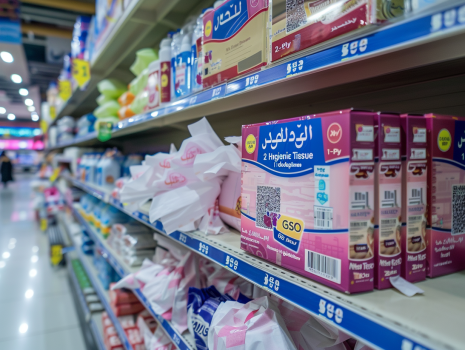
A Saudi buyer once told me, “If the customs officer doesn’t see Arabic on the pack, it won’t clear.” It’s that serious. Without GSO, your products could be delayed, fined, or rejected altogether. With it, you gain access to over 50 million consumers across GCC.
GSO vs. Non-GSO Outcomes
| Factor | With GSO Compliance | Without GSO Compliance |
|---|---|---|
| Customs clearance time | 2–4 days | 7–21 days or denied |
| Retail chain acceptance | ✅ Yes | ❌ No |
| Distributor trust | ✅ High | ❌ Low |
| Risk of rejection/fines | ❌ Minimal | ❗ High |
Conclusion
Soft pack tissues can fully meet Middle East hygiene standards like GSO—if made right. With the right certifications, labeling, and factory hygiene, your products stay compliant, clear customs fast, and win trust in GCC markets.
Contact: [email protected]
Brand: Yingbailanka
Website: onepacktissue.com
Country: China
[^1]: Understanding GSO hygiene standards is crucial for compliance and successful export to GCC countries.
[^2]: ISO regulations ensure quality and safety in tissue manufacturing, vital for market acceptance.
[^3]: Understanding customs clearance requirements is vital for timely delivery and market access.
[^4]: Lab test documentation is key for proving compliance and ensuring smooth customs clearance.
[^5]: GSO 575:2016 outlines essential requirements for facial tissues, ensuring compliance in GCC markets.
[^6]: Learn about the processes that ensure tissues are hygienically produced, crucial for consumer safety.
[^7]: Sealed packaging protects tissue integrity and hygiene, essential for market success.
[^8]: Tensile strength affects the durability of tissues, making it a critical factor in product quality.
[^9]: ISO 9001 certification signifies quality management, enhancing trust in your tissue products.
[^10]: SGS testing provides independent verification of product quality, crucial for market acceptance.
[^11]: G-mark declarations are essential for compliance in GCC markets, ensuring product safety.
[^12]: Bilingual label proof ensures compliance with local regulations, facilitating market entry.
[^13]: A halal mark is essential for consumer trust in Muslim-majority markets, impacting sales.
Share this article
About the Author

You might also like

Why Are Bamboo Fibre Tissue Manufacturers with Low MOQs Better Suited for Small and Medium-Sized Wholesalers?

Why Is Demand for Bamboo Fibre Toilet Paper Growing Rapidly in the US Market?

How to Determine Whether a Bamboo Fibre Tissue Manufacturer Possesses Long-Term Supply Capability?

Why Are Soft Pack Facial Tissues Gaining Popularity in Hotels and Restaurants?

How Can Customized Soft Pack Facial Tissues Boost Your Brand’s Image?
What Are the Key Benefits of Using Soft Pack Facial Tissues Over Traditional Boxed Tissues?

Is There a Market Demand for Eco-Friendly Soft Pack Facial Tissues in the Middle East?

What Should Wholesalers Look for in a Reliable Soft Pack Facial Tissue Manufacturer?

Can Soft Pack Facial Tissues Be Customized for Religious and Holiday Events?